Doomsday Investing
May 28, 2012 1 Comment
 The world economy is far from the pink of health,but I don’t think that the end of the world ,as we know it, is upon us.However I do believe in having a wealth pyramid in place.If your are coming in late,you can read more about it in an older post here: https://wealthymatters.com/2011/09/30/wealth-pyramid/#more-1948.And the time for building an ark is long before the deluge…..
The wealthiest in the world have the most to lose in a crisis.They also often care the most about not losing it all.Moreover they have the money and the contacts to put in place the most elaborate fall back plans.The following are some actions that wealthy people in different parts of the world seem to be taking to limit the damage to their fortunes.( http://www.reuters.com/article/2011/10/04/us-wealth-summit-investment-idUSTRE7933LS20111004) Why not be influenced a little bit by them?Especially with a little part of the funds lying at the bottom of the pyramid?The worst that could happen is that nothing happens and we feel foolish.On the other hand if we wait till there is blood on the streets,it might be too late to do anything much. Read more of this post
 Robert Frank’s new book “High-Beta Rich-How The Manic Wealthy Will Take Us To The Next Boom,Bubble And Bust” is based on interviews with more than 100 people with net worths (or former net worths) of $10m or more. These include the Blixseth family, former billionaires who had to lay off all 110 staff in their enormous residence; the Siegels, who had to abandon the largest private house in the US before it was completed; and Jack Warner, who built a fortune from various business, but ended up a penniless handyman.It is also a tale of how the financial crash of 2008 has affected the US more generally. It includes numerous unemployed former butlers, unoccupied mansions and falling tax revenue for fiscally-pressed state governments. In addition, Frank tells the story of upmarket repo men who specialise in repossessing planes, yachts and the like from indebted millionaires.So basically Frank revisits the lives of the people he profiled in Richistan, and follows up on what has happened to them in the years since he wrote the book in 2006. By 2011, some of these rich people have since gone from riches to rags, or merely to less affluence. His follow up on the people whose jobs it was to serve the needs of the rich shows how many of them are now finding it hard to secure stable jobs from the rich since the 2008 .Since the book with vivid sketches of how the rich, and the formerly rich, really live is a sequel to Richistan, published in 2007, in which he profiled the lives of the rich before the recent financial bust, do read it before starting on this one.
 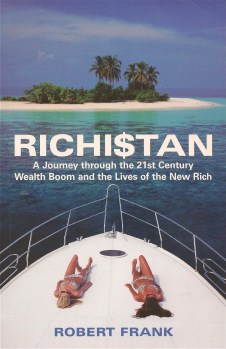 “Richistan: A Journey Through The 21st Century Wealth Boom and the Lives of the New Rich” is a book by Robert Frank who writes “The Wealth Report,” a Wall Street Journal weekly column and blog.The book is an eye-opening, educational and at times amusing summary of Frank’s years of analysis of the “new rich”.They came to his attention in 2003 when he noticed that statistics from the Federal Reserve Board showed a curious pattern: the number of millionaire households in the U.S. had doubled since 1995 and showed no sign of slowing.
 The Bloomberg Billionaires List consists of a daily ranking of billionaires by net worth.You can access it here
  Yesterday the local forex market closed at Rs 56 per USD. So depending which institution a person chose to patronize,whether he/she was buying or selling dollars and in which form, he/she would have paid a price close to Rs56 per USD along with the institution’s commission and/or transaction costs.






 wealthymatters