The Sensex And The General Elections
March 14, 2014 Leave a comment
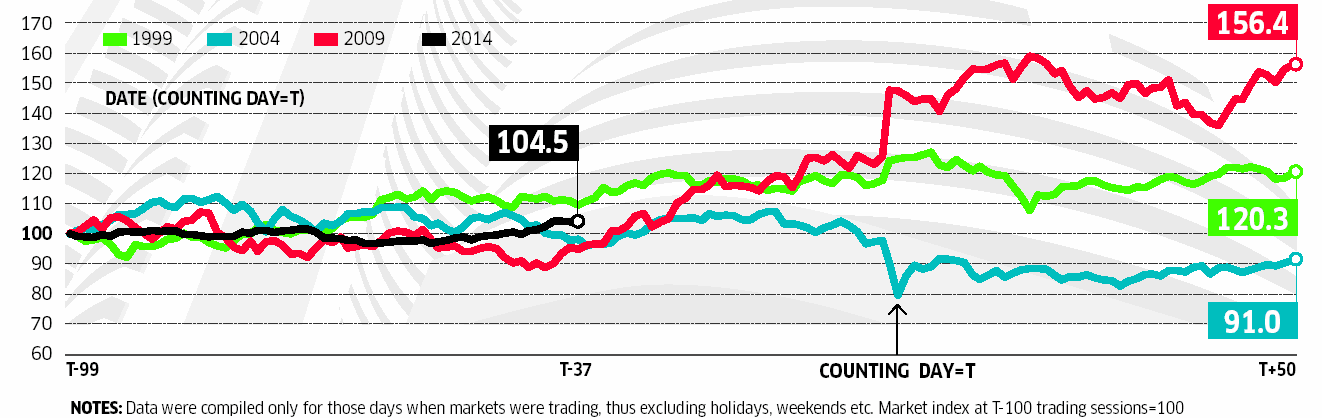
Much has been made of the current rally in the SENSEX,which is generally explained as anticipation of a Modi win.However,compared to the earlier elections in 1999, 2004 and 2009,the rally in 2014 has been much less spectacular,as you can see by following the black line.
Also more volatile markets were seen in both 1999 and 2004- the green and blue lines.
Interestingly,speculators start reacting more sharply in the last couple of weeks before counting gets underway.In 2004.when the markets were seen as anticipating a BJP win, like today,it had already began trending down in the days leading to the vote count.
Predicting the outcome of the elections is itself less than an exact science.So too is predicting the stock market movements.So leave such predictions to the insiders if you wish to safeguard your capital.Or become an insider before you speculate,if you are inclined that way.


 If you have been reading my blog for a while,you know I had a run-in with ICICI-Lombard’s SEO team last November.
 In 1986, Warren Buffett bought a 400-acre farm in Nebraska, and in 1993, he invested in a retail property near the New York University campus. The deals came after farming and real estate bubbles had burst, and in both cases, he knew very little about the day-to-day operations of what he was buying. But Buffett saw the potential. And while he may not have known about farming or building management, he knew people who did.






 wealthymatters