Mostly A Matcher
June 19, 2014 Leave a comment

Here’s my result from the GiveAndTake site,what’s yours?
According to your ratings, your primary style is matcher. This means that in your interactions with others, your core motivation is to maintain an equal balance of give and take. You probably spend many of your waking hours trading favors and keeping track of what you owe and what other people owe you.
As a matcher, odds are that you view fairness as a core value—you don’t want to be selfish, but you also don’t want to be so selfless that people can take advantage of you. When people in your network ask you for help, your instinct might be to consider whether they’ve helped you in the past, or are willing to do so in the future. When you work in teams, you’re willing to put in just as much as your colleagues do. At the bargaining table, you make sure that both sides walk away with what they deserve.
Based on your scores, you’re less inclined toward giver and taker styles. Givers aim to contribute as much as they can, without worrying about what they get in return. They spend many of their waking hours helping others, connecting people who can benefit from knowing each other, and offering mentoring and advice. Takers strive to get as much as they can, under the assumption that if they don’t look out for themselves, no one else will. To win, takers often focus on doing better than others and claiming credit.
 People differ in their preferences for reciprocity. Accordingly they can be divided into Givers, Takers and Matchers. Takers are people who, when they walk into an interaction with another person, are trying to get as much as possible from that person and contribute as little as they can in return, thinking that’s the shortest and most direct path to achieving their own goals.
 The notion of “win-win” a dangerous trap while negotiating. So be very, vary wary of win-win. The win-win ideal tempts good-hearted people to buy into bad deals that they later come to regret.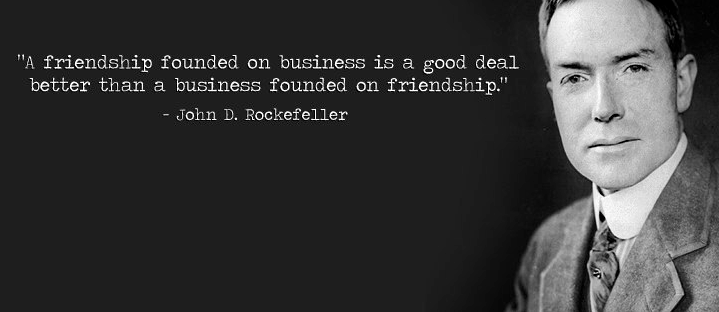
 John D. Rockefeller had a difficult childhood. His family bounced between poverty and comfort because his father was a con-artist. The elder Rockefeller traveled the countryside of upstate New York selling patent medicine which was often simply “snake-oil.” The Rockefellers didn’t fit in the small New York village where they lived.Just like most small towns, everybody knew each other. Gossip and rumor spread like wildfire. And the village scorned Rockefeller’s father who they correctly labelled a snake-oil salesman. Whispers followed the family, they were excluded from social life and young John could not help but hear the vicious things the villagers said about his family.






 wealthymatters