The Housing Sentiment Index


wealthymatters

The MB IIMB HSI,jointly developed by IIM-B and magicbricks.com will determine how buyers and investors view the market, which in turn, influences their purchase decisions and aggregate demand. The index is likely to become an early indicator of how markets would perform in the future.

An HSI of 100 suggests that buyers expect prices to remain at current levels while values lower and greater than 100 suggest that buyers expect prices to fall and rise, respectively.

The Housing Sentiment Index (HSI) has dropped almost 20% over the past quarter across India, except in Bangalore, where sentiment has improved due to the uptick in the IT industry. The aggregate HSI dropped to 93 from 117 in the previous quarter. Read more of this post

The Sensodyne Story


wealthymatters

Sensodyne, Glaxo SmithKline Consumer Healthcare’s sensitive toothpaste, has had a sensational run in India so far, emerging the top brand in its category and a 150-crore business in just three years.This feat is even more admirable given how the odds were stacked against Sensodyne: Colgate and Hindustan Unilever almost entirely controlled the oral care market; only 17% Indians knew what tooth sensitivity was against a global average of 33%; GSK Consumer had the baggage of one failed oral care launch — Aquafresh — before it; and, just 4% of Indians visited dentists. Clearly, Sensodyne’s success credentials globally were not going to be enough to make it big in India.

G Venkatramani, general manager, sales, at Glaxo Smith-Kline Consumer Healthcare India, and Rahul Bibhuti, general manager (marketing) – oral care at the firm are behind the most successful FMCG launch in recent years. Venkatramani,is a post- graduate in economics from Loyola College, Chennai. He worked with Nestle, Gillette and P&G before joining GSK five years ago. Bibhuti is an alumnus of Jamnalal Bajaj Institute of Management Studies and he worked with Dabur before joining GSK Consumer.  Read more of this post

Invitation


wealthymatters

If architecture,building design and renovation,construction techniques and ideas,great designs ideas,interior decoration,DIY etc. is your thing,I invite you to take a look at my new blog:An Engineer Writes

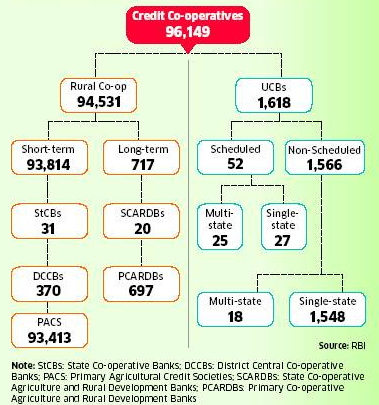
Classification Of Co-Operative Credit Institutions In India


Classification Of Co-Operative Credit Institurions In India

Underestimating Economic Growth


wealthymatters

The GDP growth estimate for India in 2009-10 was initially 7.7% but later revised to 8% and finally to 8.4%. The 2010-11 GDP growth was revised from an initial 8.4% to a final 9.3%. Why did this happen? The principal reason was the wide, continuing divergence between trends in the index of industrial production (IIP) and trends revealed by the Annual Survey of Industries (ASI).

The IIP is based mainly on data gathered from large companies, and provides a quick estimate of how things are going. This is the indicator the government relies on for early estimates of industrial and GDP growth. By contrast, the ASI takes time, covers all units employing more than 10 workers using power or 20 workers without electricity. This means it covers the bulk of — though by no means all — small and medium industries. It provides data on value addition, whereas the IIP refers only to production. ASI data comes with a lag of up to two years. This fuller picture is then used to finally revise estimates of GDP and industrial growth.  Read more of this post