Why Go Private?


wealthymattersBeing the promoter of a public company is seen as prestigious.So why do promoters sometimes opt to make their company private again?The simple answer is often the possibility of Private Gains.Public share holders and promoters often have vastly different perspectives on making money,vastly different time horizons when it comes to harvesting gains,vastly different risk perceptions and holding power.Here is an example:

In early ’13,Dell had  a total market cap of about $22 billion.  They also had about $11 billion in cash, which meant the stock market was valuing the entire business at $11 billion ($22 – 11).  The company had a price-to-earnings multiple of about 8.5.

So the situation was that, if Michael Dell and private equity investors put in $2 bilion, used the cash on the company’s books and borrowed the remaining $9 billion, they could control the entire company without the hassle of having public shareholders.

The flexibility of not having public shareholders would enable Michael to do what has needed to be done for years, and that is massively streamline the company’s manufacturing and sales forces (probably through layoffs), re-focus the core PC business, grow the enterprise and consulting businesses, and make the company generally more Lenovo-like or IBM-like. Read more of this post
Patricia Narayan – FICCI Woman Entrepreneur of the Year


wealthymatters

Here are some words to read if ever you feel that there is no end to darkness:

I was always interested in cooking and passionate about trying out new dishes. But, the thought of becoming a business woman never came to my mind at all as I do not come from a business family. Both my parents were government servants.

But my marriage changed everything. Both the families opposed the marriage vehemently as my husband belonged to the Brahmin community; unfortunately my marriage did not work out as my husband was addicted to alcohol, drugs, etc. I could not bring him out of the addiction. As a young woman, I did not know how to cope with this and I was getting beaten up everyday.

Though my father, a very conservative Christian never forgave me, he gave me refuge when I had nowhere to go. I was thrown out with two very small children. It was a question of survival for me. I knew I should either succumb to the burden or fight; I decided to fight my lonely battle.

I did not want to be a burden on my parents. So, to be economically independent, I could only do what I knew and what I liked. I started making pickles, squashes and jams at home. I just took a couple of hundred rupees from my mother. I sold everything I made in one day and that gave me confidence.

Read more of this post

Succeeding Without Risk


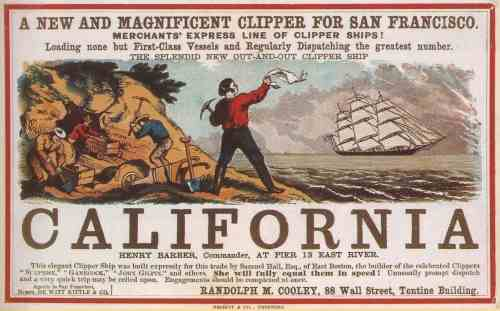
California Gold Rush

The common perception is that entrepreneurs thrive on risk. The greater the risk they take, the greater their win……….Just how right is this perception ?

From 1848 to 1855, people from all over the world rushed to California with one goal in mind: To get rich. James W. Marshall had discovered gold here. People dropped everything they were doing to travel out West.

Pioneers everywhere packed up their belongings, along with their loved ones, with one goal in mind. To seek out a metal so rare, it could potentially change their future for generations to come. Some families suffered and died from diseases such as cholera and scurvy on the trip over. Others were killed by Indians or watched their lives pass them by as they froze to death in the rocky mountains.

A new movement was on the way and everyone wanted a piece of it. The dynamics of the situation were so influential and rewarding that many would risk death to be able to reshape their family fortunes. Any commoner could do something that they never had the opportunity to do before-they could potentially join ranks and become equals with the elite.

Read more of this post

The Benefits Of Offering Multiple Payment Options


wealthymatters

Many small home-based businesses, web enterprises and medium-sized companies limit their payment methods to one or two because they feel that it’s easier to process and track sales that way even though payment flexibility offers more convenience and value to their customers. However, modern technology makes multiple payment processing just as easy for and it can increase business.

Here are some reasons why offering multiple payment options can help your business:

1. People not only like choices, sometimes they need them. Analysis of shopping cart abandonment rates for online retailers shows that the major reason that consumers stop short of completing a transaction is limited payment options. Offering flexibility increases customer satisfaction and sales.

2. Using only an online payment service or only credit card payment options forces customers who don’t have one or the other to either create a new account or use a vendor that accepts their preferred payment method. Anything that sends a customer elsewhere or introduces extra steps in order for them to complete a transaction is going to affect your sales and customer relations. Read more of this post

Sensex Churn


wealthymatters

The Sensex churns by over 50% over a 10-year period. That is to say, if we begin a decade with 30 stocks in the Sensex, by the end of the 10-year period, less than 15 of those stocks are in the Sensex. This churn ratio was below 15% in the 1980s, but has steadily risen over the last 20 years.

Moreover, compared to other large emerging markets or the West, the Indian market churns much more (eg. the Dow Jones index (US) has 23% churn, the Hang Seng (Hong Kong) 30% and the Bovespa (Brazil) 39%). So, why has the Sensex’s churn gone up so sharply in the past 30 years? And why does the Sensex (or the Nifty) churn so much more than any other large stock market in the world? Back in the days when the Licence Raj prevailed, the Indian economy was fairly ossified. Unless you turned up in New Delhi with truckload of goodies for the powers that be, your company did not go anywhere. As a result, hardly any companies entered or exited the Sensex during that era.

Then, 1991 came and Manmohan Singh unveiled his ‘New Economy Policy’. Over the next 10 years, the Sensex churned 63% as a host of stalwarts from the Licence Raj tumbled out. So out went Hindustan Motors and Premier with their vintage cars. Along with them a slew of textile companies – Bombay Dyeing, Century Textiles, Futura Polyster – also found themselves ejected from the Sensex. Among the 20-odd entrants into the Sensex were several representatives of the post-liberalisation India, including Infosys, HCL Tech, Satyam Computer, Zee Entertainment, Cipla, Dr Reddy’s, Ranbaxy and ICICI Bank. In effect, the intense churn in the Sensex reflected the revolution that the Indian economy underwent in the decade post-1991.  Read more of this post