Money As Debt – Paul Grignon
September 3, 2011 1 Comment
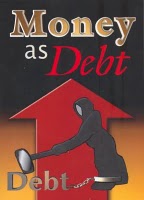
I watched this documentary ‘Money as Debt’ by Paul Grignon today.It uses attractive animation to explain fractional reserve banking.And I can say that for the first time in my life I got to appreciate how humanity has managed to create the mountain of debt we have piled up.I always sensed that banks created money but only now I have a grasp of just how much.
I rate this video as pretty good .It’s a bit theoretical but not too off putting all the same.I can’t say I was able to understand all the implications of everything I watched but I do know my brain will keep revisiting the ideas I could not grasp at the first go.So this movie will have managed to expand my mind a bit.
I can’t say I agree with the film maker’s idea of a world which will run out of resources to sustain growth because I believe that human ingenuity will just find new uses for materials and waste materials we do not consider resources today. Read more of this post

 Certain familial relationships impose legal obligations and responsibilities depending on the nature of the relationship. The term ‘maintenance’ includes provisions for basic facilities, such as food, clothing, shelter, education and medical treatment.For want of some basic knowledge a lot of people often suffer needless privation.Here is a list to help Hindu females of all ages whether they be children; married, unmarried, separated, divorced or widowed women or aged mothers:
 Stridhan is a combination of two Sanskrit words ‘Stri=Woman’ and ‘Dhan=Wealth’ which put together means ‘Woman’s property’. Stridhan is a traditional property right of Hindu women accepted by Indian Hindu Society.Stridhan ensures a women’s economic independence.
 After a person dies, there are often pretty big rifts in the family.Hidden stresses come out in the open and contesting claims to the deceased person’s property is fairly common.The problems are compounded by the fact that the law defines self acquired and ancestral property differently from common parlance.





 wealthymatters