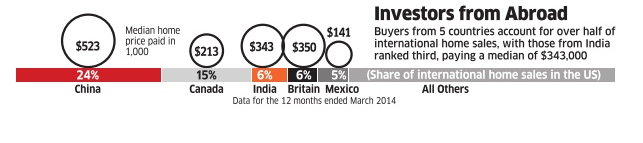
Indians Buying Homes In The US


Indians Investing in US Real EstateQuite a few resident Indians are becoming  global landlords by picking up  inexpensive houses in the USA. For these affluent Indians, the US real estate is a security blanket. Faced with what some of them consider  bubble real estate prices in major Indian cities and a sometimes jittery Bombay Stock Exchange, they are joining a wave of buyers from other countries who see the recovering US housing market as one of the best places to put their money in these days.

The most popular areas where Indians buy homes are in and around Silicon Valley, where technology firms heavily recruit from India; in the Boston and Philadelphia areas near universities that have numerous students from India; and in suburban areas of New Jersey and in Queens, where there are established Indian-American communities. Read more of this post

Anatomy Of Offshore Holding Structures


Anatomy Of Offshore Holding Structures

Nominee Shareholder


wealthymattersA nominee shareholder  is a person or entity listed as the holder of the securities or shares of an offshore corporation rather than its actual owner, which allows them to remain anonymous.

Traditionally, the way to maintain the privacy of investors and business owners has been the use of bearer shares. However, these titles are losing popularity due to restrictions imposed by measures against money laundering. But the offshore industry soon devised an alternative and introduced the figure of the so-called nominee shareholder or trustee. This can be a natural person or another offshore company that is exclusively incorporated to be used for this purpose and is usually provided by the registered agent or the formation agency ie a corporate trustee.

The data contained in the incorporation documents of the company, which are either filed with the registrar of companies or deposited privately at the registered office, depending on the legal requirements of the jurisdiction where the company is incorporated, refer only to the nominee shareholder.

So how are the rights of the real owner guaranteed? Because the nominee shareholder is included in all the documents of the company, it is necessary to take additional steps to ensure the rights of the real or beneficial owner. This can easily be solved by means of a document called declaration of trust. It is a private contract in which the nominee shareholder recognizes holding in their custody the company´s securities, although they actually belong to their client. Read more of this post

Offshore Registered Office And Offshore Registered Agent


wealthymatters

Offshore Registered Office :

An offshore registered office is the official address of an offshore company, to which authorities, courts, and suitors send their notices, letters and reminders. The registered office can be anywhere in the jurisdiction of the offshore incorporation. It must always be an effective address for delivering documents to the company.

Offshore Registered Agent :

An offshore registered agent represents an offshore company in the jurisdiction of incorporation. The registered agent normally provides a registered office address, arranges liaison with local authorities and receives all legal and tax papers and/or notices addressed to the underlying company, corporation or foundation. Not all jurisdictions require a registered agent but virtually all would necessitate a registered 0ffice. Read more of this post

Incorporating Offshore


wealthymattersAn offshore company is a corporation or other type of legal entity which is incorporated or registered in an offshore financial centre or “tax haven”‘.


The extent to which a jurisdiction is regarded as offshore is  a question of perception and degree.Classic tax haven countries such as Bermuda, British Virgin Islands and the Cayman Islands are quintessentially offshore jurisdictions, and companies incorporated in those jurisdictions are invariably labelled as offshore companies. Then there are certain small intermediate countries such as Hong Kong and Singapore ,sometimes referred to as “mid-shore” jurisdictions, which, while having oversized financial centres, are not zero tax regimes. Finally, there are industrialised economies which can be used as part of tax mitigation structures, including countries like Ireland, the Netherlands and even the United Kingdom, particularly for corporate inversion.Also, in federal systems, states which operate like a classic offshore centre can result in corporations formed there being labelled as offshore, even if they form part of the largest economy in the world ,for example, Delaware in the United States.

Similarly, the term “company” is used loosely, and at its widest can be taken to refer to any type of artificial entity, including not just corporations and companies, but potentially also LLCs, LPs, LLPs, and sometimes partnerships or even offshore trusts. Read more of this post